Vermiculite Board for Wood-Burning Fireplaces
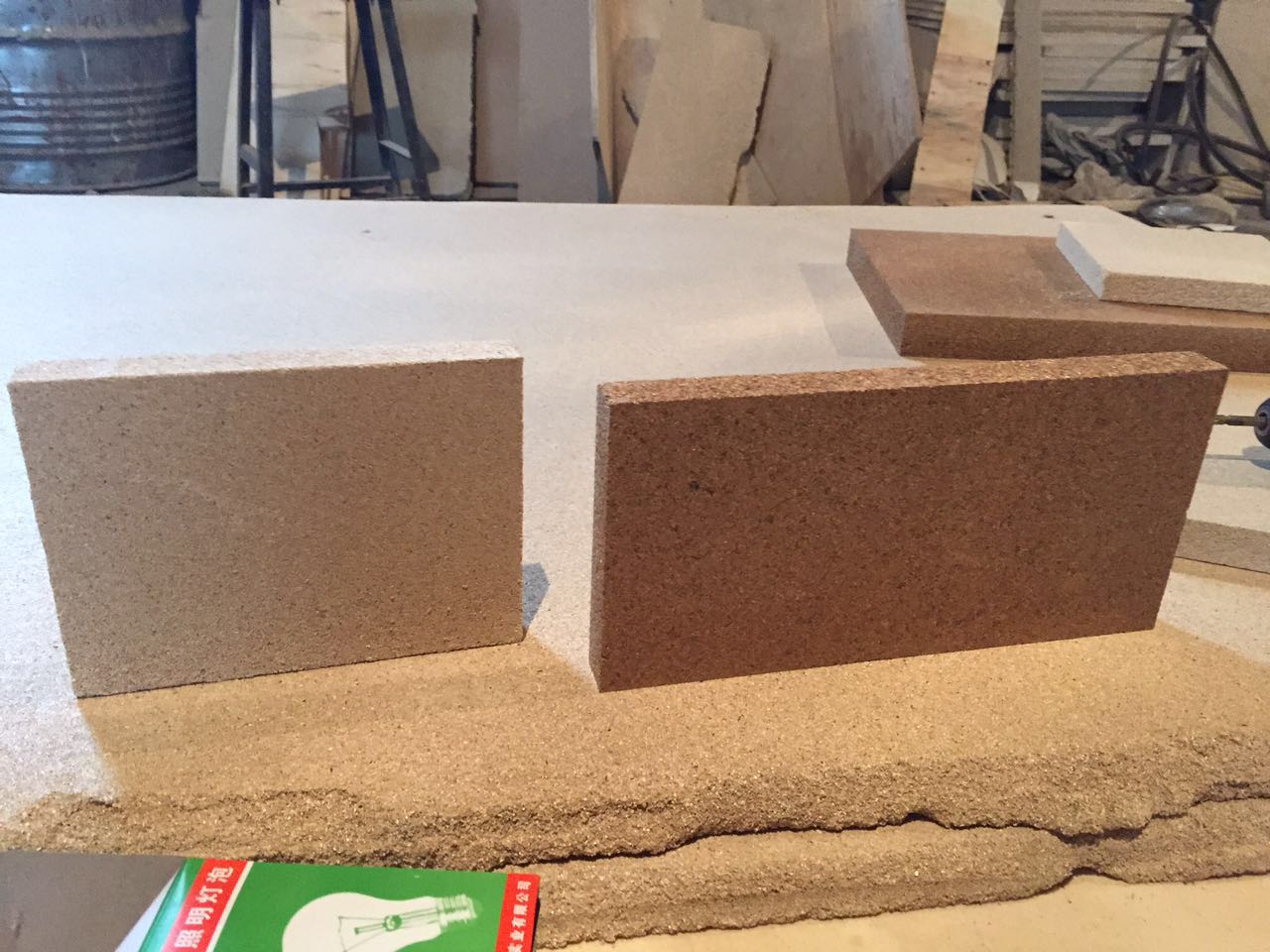
Open the firebox of almost any modern wood stove or freestanding fireplace and you will find light-weight, tan-colored panels lining the walls. There is a good chance those panels are made of expanded vermiculite board — one of the most widely specified insulation materials in the wood-heating industry. In this article we explain exactly where vermiculite board is used inside a wood-burning fireplace, why engineers choose it over traditional fire brick, and what to look for when ordering replacement panels.
What Is Vermiculite Board?
Vermiculite board is a rigid, asbestos-free insulation panel made from expanded vermiculite granules bonded with inorganic binders. It combines three properties that are difficult to find in a single material:
High temperature resistance — continuous service up to 1,100 °C, with short-term peaks around 1,200 °C.
Low thermal conductivity — typically 0.08–0.13 W/m·K, keeping heat inside the combustion chamber.
Light weight and easy machining — roughly one-third the density of fire brick, and it can be sawn, drilled and routed with ordinary hand tools.
Inside a wood-burning firebox, surface temperatures routinely reach 800–1,100 °C. Vermiculite board is engineered to survive exactly this environment — and to do so for years as a replaceable consumable.
Four Key Applications Inside a Wood-Burning Fireplace
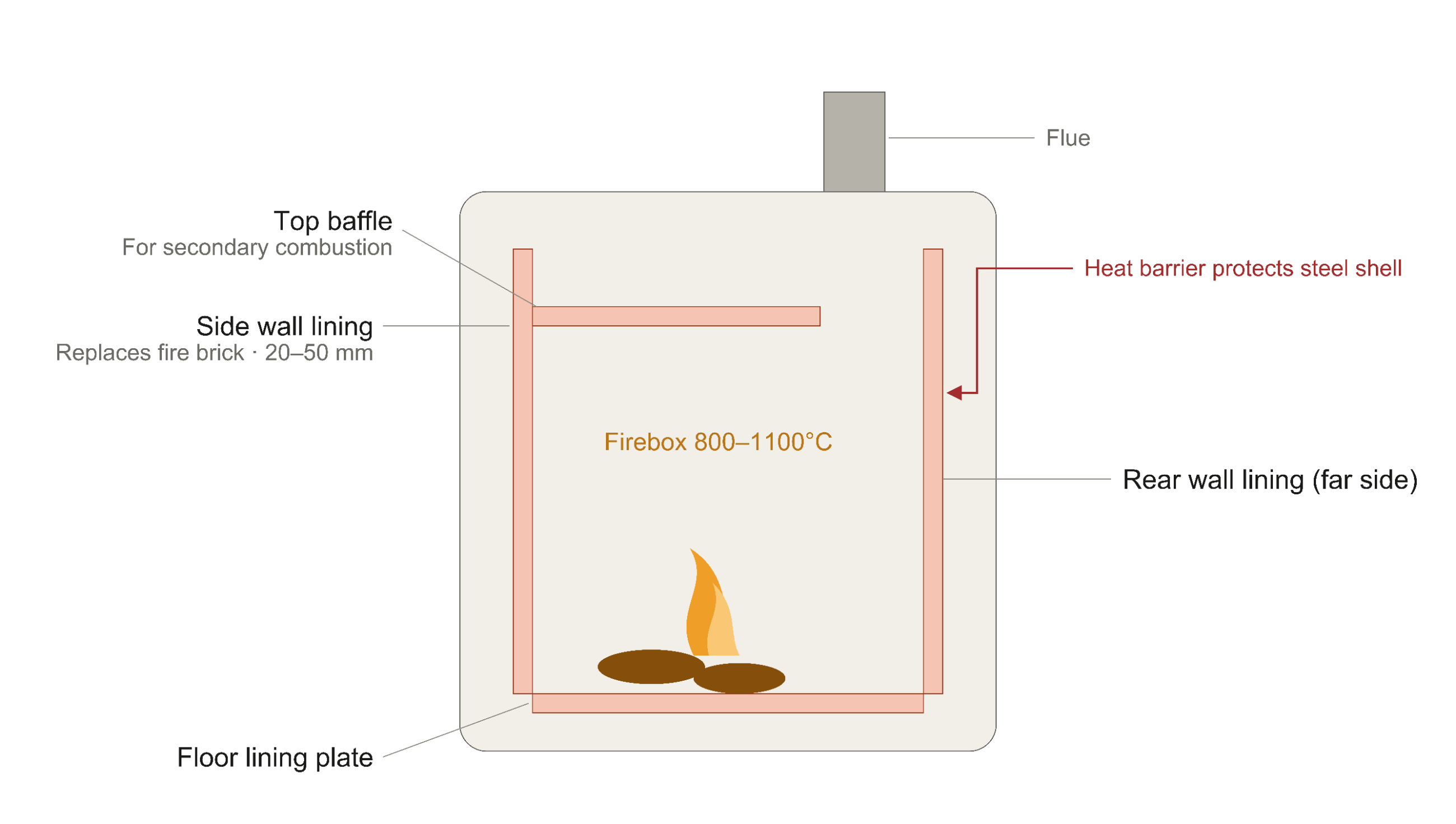
1. Firebox lining — side walls, rear wall and floor
The primary application. Vermiculite panels are fixed to the inner faces of the steel stove body, forming a sacrificial thermal barrier between the flame and the outer shell. This lining does two jobs at once: it reflects heat back into the combustion zone so fuel burns hotter and cleaner, and it protects the steel casing from distortion, paint damage and excessive surface temperatures. Panels most commonly range from 20–50 mm thick, with rear and side linings usually 20–30 mm and floor plates 25–50 mm.
2. Top baffle (secondary combustion plate)
Mounted horizontally in the upper part of the firebox, the baffle forces flue gases to change direction and stay in the hot zone longer. Unburnt volatiles ignite in this secondary combustion stage, which raises efficiency and reduces smoke and particulate emissions — critical for stoves sold under EPA and Ecodesign regulations. Because the baffle faces direct flame impingement, it is a wearing part; vermiculite baffles are light, inexpensive and can be swapped out in minutes without tools or special skills.
3. Door frame and stove glass surround
A thin strip of vermiculite board placed between the door frame and the ceramic viewing glass buffers the glass from extreme temperature gradients and slows the ageing of the door seal rope. This small application prevents the two most common warranty claims on glass-fronted stoves: cracked glass and leaking door seals.
4. Hearth plates and wall heat shields
Beyond the firebox itself, vermiculite board is used for load-bearing hearth plates beneath freestanding stoves and as rear heat shields between the appliance and combustible walls. Fireplace inserts (inset stoves) use vermiculite lining kits for the same reason: the surrounding masonry and timber structure must be kept well below safe temperature limits.
Vermiculite Board vs. Fire Brick: A Quick Comparison
| Property | Vermiculite board | Traditional fire brick |
|---|---|---|
| Density | ~600-800 kg/m³ (light) | ~1,900–2,100 kg/m³ (heavy) |
| Thermal conductivity | 0.08–0.13 W/m·K | ~1.0–1.5 W/m·K |
| Machining | Cut and drilled with hand tools | Requires diamond blade cutting |
| Thermal shock resistance | Excellent — no spalling | Can crack under rapid cycling |
| Replacement | Individual panel swap, minutes | Masonry work, mortar curing |
Practical takeaway: fire brick still suits heavy masonry fireplace builds, but for factory-made steel stoves and inserts, vermiculite board delivers better insulation per kilogram, faster installation and far cheaper maintenance.
Ordering Replacement Vermiculite Panels: What Suppliers Need rto Know
If you source vermiculite board for stove linings, provide your supplier with these four specifications to get a quotation that fits first time:
Dimensions — length × width × thickness per panel (millimetres).
Service temperature — 1,100 °C continuous grade is standard for firebox use.
Quantity — panel counts per stove model, or bulk sheets (typically 1,000 × 620 mm) for in-house cutting.
Machining requirements — cut-to-size, drilled holes, chamfered edges or shaped baffles can all be supplied finished.
Because vermiculite board is a consumable, many stove brands and fireplace retailers stock it as a recurring spare-parts line — a stable, repeatable order stream for distributors.
Frequently Asked Questions
What temperature can vermiculite board withstand in a fireplace?
High-quality expanded vermiculite board withstands continuous service temperatures of 1,100 °C and short-term peaks up to 1,200 °C, which covers the 800–1,100 °C range typically reached inside a wood-burning firebox.
Can vermiculite board replace fire brick in a wood stove?
Yes. Vermiculite board is widely used as a fire brick replacement in firebox walls, floors and baffles. It is roughly one-third the weight of fire brick, can be cut with ordinary hand tools, and damaged panels can be replaced individually.
How thick should vermiculite board be for a stove lining?
Most stove manufacturers use vermiculite board between 20 mm and 50 mm thick. Side and rear linings typically range from 20–30 mm, while floor plates and baffles are usually 25–50 mm depending on the stove's rated output.
Does vermiculite board contain asbestos?
No. Modern vermiculite board is an asbestos-free, mineral-based insulation panel made from expanded vermiculite and inorganic binders, and it is safe for use in domestic heating appliances.